Choosing the right Wound Cleansing Solutions can influence comfort, tissue protection, and the overall wound-care process. However, the choice is rarely as simple as selecting the most expensive bottle. Wound type, contamination level, exudate, tissue condition, patient sensitivity, and treatment goals all deserve attention.
Professor Karen Ousey, a recognized wound-care researcher and educator, has stated, “Wound cleansing is an essential part of wound management.” That principle remains practical at the bedside. A clinician may notice dried exudate around a wound edge, fragile granulation tissue, or a patient flinching during irrigation. These details matter. They can guide decisions about solution composition, delivery method, temperature, and cleansing frequency.
Small choices matter.
This guide presents seven practical tips for evaluating Wound Cleansing Solutions. It considers antimicrobial claims, cytotoxicity concerns, application convenience, packaging, storage, and evidence quality. It also encourages readers to examine product instructions and local clinical protocols before use. No solution is perfect for every wound. Even familiar products can be unsuitable when used without assessment.
Some recommendations may appear obvious. They are not always followed consistently. A product label can sound authoritative, yet marketing language is not the same as strong clinical evidence. Likewise, a clean-looking wound does not automatically mean that aggressive cleansing is appropriate. Reflecting on these gaps can improve decision-making. The safest approach combines current evidence, professional experience, patient comfort, and careful reassessment.
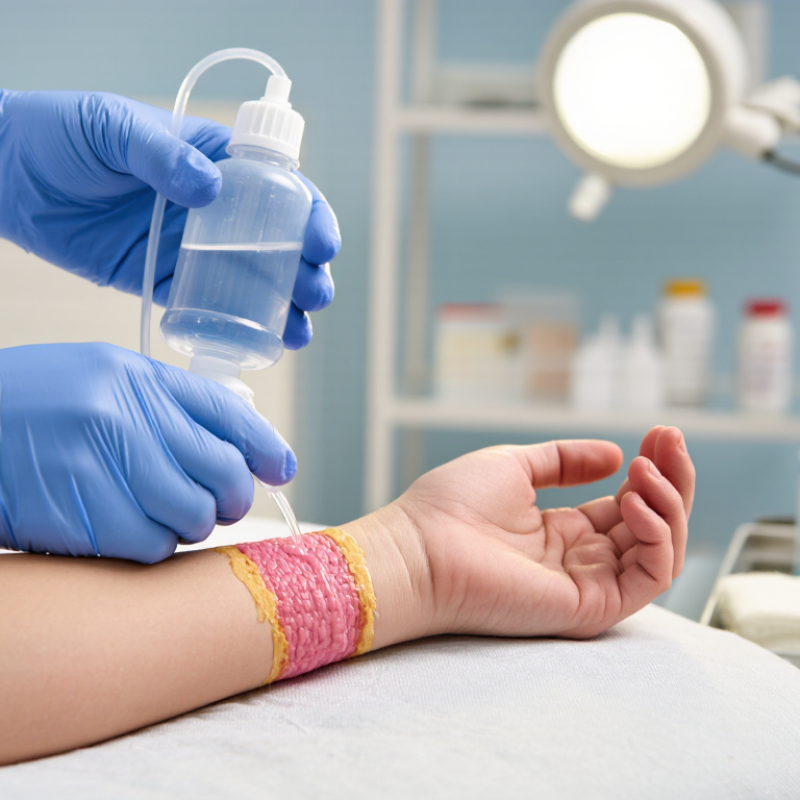
Before choosing a wound cleansing solution, identify the wound’s purpose and condition. Cleaning should remove dirt, dried blood, loose tissue, and surface microorganisms. It should also protect healthy tissue and support a balanced healing environment.
A shallow scrape usually needs gentle irrigation with sterile saline or clean running water. Avoid harsh scrubbing. A surgical wound may require a specified solution and technique from the healthcare team.
Chronic wounds often contain heavy drainage, dead tissue, or biofilm, so assessment matters more than routine rinsing. Burns, puncture wounds, animal bites, and deep wounds need professional evaluation. They may hide damage beneath a small opening.
Look closely at the wound before selecting a product. Note its depth, color, odor, drainage, surrounding redness, and the person’s pain. Sterile saline is often well tolerated, while strong antiseptics can irritate tissue or delay healing when used incorrectly. This detail is easy to miss. More cleaning is not always better.
Use single-use supplies when possible, and follow the solution’s instructions. Check allergies and medical conditions, especially diabetes or poor circulation. Stop and seek medical care if redness spreads, swelling increases, fever appears, or drainage becomes thick and foul-smelling. The perfect solution does not exist. The safest choice depends on the wound, the person, and the reason for cleansing.
When choosing a wound cleansing solution, read the ingredient panel before trusting the label. A clear liquid is not automatically gentle. Check the active cleansing agent, preservatives, fragrance, alcohol, and acidity. Fragrance is usually unnecessary for open tissue. Some preservatives may irritate sensitive skin, especially after repeated use. The solution should match the wound’s condition, surrounding skin, and clinical plan.
Look for sterile packaging and an intact seal. Check the expiry date. Also review storage instructions and the discard time after opening. A solution that touched a wound should not return to the container. That small detail matters. Wound-care guidance commonly favors products that remove debris without harming healthy cells. Harsh antiseptics may delay healing when used routinely, unless a qualified clinician recommends them. Saline suits many situations, but it is not right for every wound.
Ask whether the formula has evidence for its intended use, not merely a reassuring ingredient list. If the wound burns sharply, becomes more red, or develops a rash, stop and seek professional advice. People with allergies, diabetes, poor circulation, or immune problems need extra caution. Read the instructions carefully. I would also question familiar products. “Natural” does not guarantee safety, and “stronger” does not mean better. When uncertain, show the product and wound to a nurse or doctor before cleaning again.
| Tip | Ingredient or Product Feature to Check | Typical Composition or Specification | Potential Benefit | Safety Profile and Key Cautions | Practical Selection Check |
|---|---|---|---|---|---|
| 1. Start with a tissue-compatible base | Isotonic saline or another balanced electrolyte solution | Normal saline is generally 0.9% sodium chloride; balanced solutions contain sodium, chloride and other electrolytes in physiologic-style proportions. | Helps remove loose debris and exudate while generally causing minimal osmotic stress to viable tissue. | Usually well tolerated and non-cytotoxic at routine use. These solutions do not provide reliable antimicrobial treatment. | For routine cleansing, look for a sterile, single-use product intended for wound irrigation. |
| 2. Distinguish cleansing from antisepsis | Presence of an antimicrobial ingredient | Antiseptic formulations may contain hypochlorous acid, polyhexamethylene biguanide, povidone-iodine or dilute sodium hypochlorite. | May reduce microbial load when an antimicrobial action is clinically indicated. | Antimicrobial activity does not automatically mean better healing. Cytotoxicity, allergy, tissue depth and exposure time must be considered. | Choose an antiseptic because of a defined clinical reason, not simply because it is labeled “stronger.” |
| 3. Verify the active concentration | Concentration, pH and contact-time instructions | Hypochlorous-acid products commonly use low concentrations such as approximately 0.01%–0.02%, but formulations vary; label instructions control. | A defined concentration supports more predictable antimicrobial performance and tissue exposure. | A higher concentration is not necessarily safer or more effective. Avoid guessing dilution ratios or extending contact time beyond the instructions. | Reject products with incomplete ingredient, concentration, pH or use-direction information. |
| 4. Screen for tissue-irritating ingredients | Alcohols, hydrogen peroxide, detergents, dyes and strong oxidizers | These ingredients may appear in general skin products but are not automatically appropriate for open wound beds. | Avoiding unnecessary irritants can reduce pain and protect viable cells involved in repair. | Hydrogen peroxide and alcohol-based products can damage tissue or cause stinging; routine use on open wounds is generally discouraged unless specifically directed by a clinician. | Prefer a wound-specific formulation with documented tissue compatibility and no unnecessary fragrance or coloring. |
| 5. Check allergy and systemic-exposure risks | Iodine, preservatives, surfactants and other declared excipients | Povidone-iodine preparations commonly contain 5%–10% povidone-iodine, while excipients differ by formulation. | A complete ingredient list allows selection around known sensitivities and patient-specific risks. | Repeated or extensive use of iodine-containing products may increase iodine absorption; use extra caution with thyroid disease, pregnancy, neonates or large wounds. | Review allergies, age, wound size, pregnancy status and relevant medical conditions before use. |
| 6. Confirm sterility and packaging integrity | Sterile status, expiry date, seal and container design | Sterile irrigation products should have an intact seal, lot identification and a clearly stated expiry date. | Reduces the risk of introducing microorganisms during cleansing. | Do not use a leaking, damaged, cloudy or expired container. Multi-use containers may become contaminated after opening unless specifically designed and handled for repeated use. | Select single-use packaging for vulnerable wounds when practical, and follow storage and discard instructions. |
| 7. Match the solution to the wound and treatment plan | Wound depth, contamination, tissue condition and clinician instructions | Superficial, clean wounds often need gentle irrigation; heavily contaminated, infected, deep, tunneling or surgically managed wounds may require a specific protocol. | A wound-specific approach balances debris removal, microbial control, comfort and preservation of viable tissue. | Seek professional assessment for spreading redness, increasing pain, warmth, pus, fever, tissue discoloration, deep wounds, bites, burns or wounds in people with diabetes or poor circulation. | Use the least irritating effective option and reassess the wound if healing does not progress as expected. |
Note: Product concentrations and indications vary by formulation and jurisdiction. Always follow the product label and qualified clinical guidance.
7 Tips for Choosing Wound Cleansing Solutions?
Match the Cleanser to Tissue and Wound Healing Needs
A wound cleanser should support healing, not simply remove visible dirt. Begin by examining the tissue, moisture level, depth, and surrounding skin. Clean, shallow wounds often need gentle irrigation with sterile saline or another solution approved by local clinical guidance. Avoid assuming that stronger means better. Some antiseptics can irritate viable tissue or delay granulation when used repeatedly without a clear indication.
The wound’s condition should guide each choice. A heavily exuding wound may need enough fluid to loosen debris without soaking nearby skin. Fragile granulation tissue needs low-pressure irrigation and minimal rubbing. Slough, dried blood, or surface debris may require a clinician’s assessment before debridement. Do not force material away. That can cause bleeding and unnecessary pain. The cleanser temperature also matters; cold fluid can make the patient uncomfortable and cause shaking.
Reassess after cleansing. Is the wound bed moist but not saturated? Is the surrounding skin less macerated? Has odor, redness, swelling, or drainage increased? These details may change the plan. It is tempting to keep using a familiar solution, even when the wound changes. That habit deserves questioning. People with diabetes, poor circulation, deep wounds, spreading redness, fever, or severe pain should seek professional care promptly. A careful choice is helpful, but it cannot replace clinical judgment.
7 Tips for Choosing Wound Cleansing Solutions
When comparing wound cleansing solutions, application method matters as much as ingredients. Choose a solution that matches the wound type, drainage level, and care setting. A trained clinician should confirm whether gentle irrigation, soaked gauze, or another method is appropriate. Irrigation can loosen debris without rubbing fragile tissue. Use steady pressure, not force. Keep it simple. Never direct a strong stream into a deep wound unless clinical instructions support it.
Read the full instructions before opening the container. Clean your hands and wear suitable protective equipment. Avoid touching the nozzle, cap, or solution to the wound. For single-use containers, discard leftover liquid immediately. Reusing them may introduce bacteria, even when the fluid looks clear. In practice, rushed routines can cause small handling errors. That detail deserves more attention. If pain, bleeding, odor, swelling, or unusual drainage increases, seek professional assessment instead of changing the cleansing method alone.
Storage conditions protect the solution’s intended performance. Keep unopened containers in a clean, dry place, away from direct sunlight and excessive heat. Follow the stated temperature range. Do not freeze the solution unless instructions specifically allow it. Check the expiry date and inspect the seal before use. After opening, record the date when required. Label it clearly. Discard any container with a damaged seal, cloudy appearance, particles, or an altered odor. Storage guidance can vary, so package instructions and local clinical protocols should guide final decisions.
Review application methods and storage requirements
This practical priority scale highlights the key checks when selecting a wound cleansing solution. Confirm the intended wound use, application method, sterility, tissue compatibility, contact time, storage conditions, expiry date, and in-use period against current clinical guidance and the product instructions.
Choosing a wound cleansing solution does not end when the bottle is opened. Skin response must guide every later decision.
Check the surrounding skin before cleansing, then observe it again afterward.
Look for increased redness, burning, tightness, swelling, or small areas of peeling. Ask the patient about stinging, even when the wound appears cleaner.
A solution that causes discomfort may still be unsuitable. The wound bed matters too. Dry tissue, heavy drainage, fragile skin, and suspected infection may require different clinical approaches.
Reassess after each dressing change, not only when problems become obvious. Record the solution used, cleansing method, skin appearance, pain level, and drainage. Clear notes help reveal gradual irritation. They also support safer communication between caregivers.
I have learned that “cleaner” does not always mean “healthier.”
Excessive cleansing can disturb delicate tissue and delay comfort. That assumption deserves review. If redness spreads, pain increases, drainage changes, or the wound worsens, pause and seek advice from a qualified healthcare professional. Do not switch repeatedly without a reason. A careful reassessment may show that the technique, frequency, water temperature, or dressing—not only the solution—needs adjustment. Be willing to change the plan. Skin often provides the earliest warning.