How to Choose the Best Wound Cleanser for Effective Healing?
Choosing the right wound cleanser is crucial for effective healing. Dr. Emily Carter, a renowned expert in wound care, once stated, “Selecting the appropriate cleanser can make a profound difference in recovery.” The wound cleanser industry is filled with options, yet many remain unaware of how to make the best choice.
Understanding the ingredients is essential. Some cleansers contain alcohol, which can cause stinging. Others might have added fragrances, leading to irritation. These details matter more than one might think. A gentle yet effective cleanser can promote healing and minimize discomfort.
When selecting a wound cleanser, consider the type of wound. Is it surgical, traumatic, or chronic? Each requires a different approach. Consulting health care professionals is vital, yet many individuals rely on over-the-counter products without guidance. This common oversight can hinder the healing process. Remember, choosing the right wound cleanser isn't just a matter of preference; it's about fostering an environment for healing.
Understanding Different Types of Wound Cleansers Available in the Market
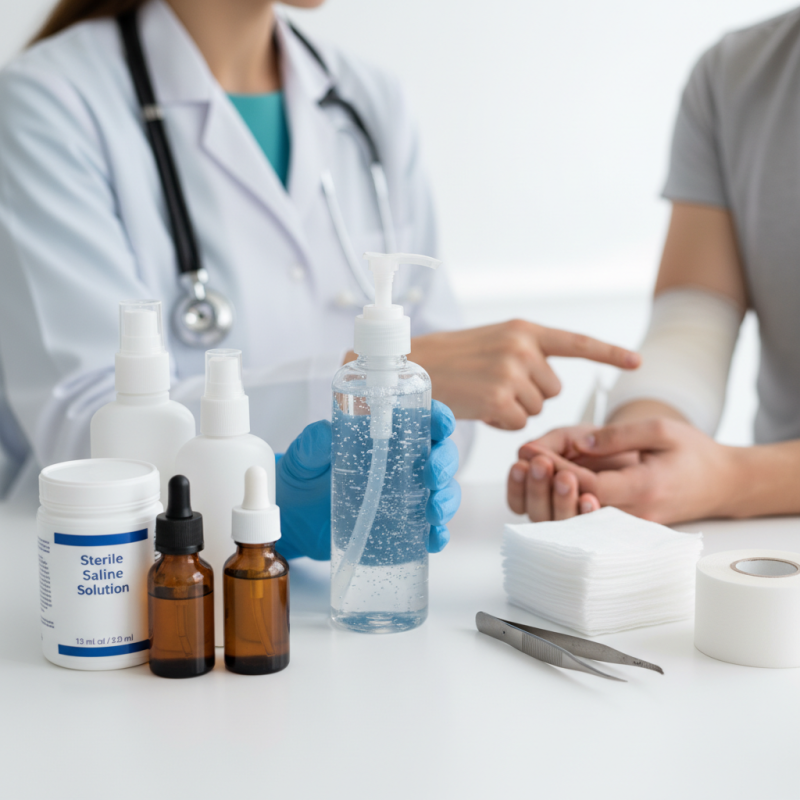
When selecting a wound cleanser, understanding the different types available is crucial for effective healing. There are generally three main types: saline solutions, antiseptic cleansers, and gentle surfactants. Saline solutions are simple and safe, making them a good choice for most wounds. They effectively flush away debris without causing further irritation. However, they may not be suitable for heavily contaminated wounds.
Antiseptic cleansers often contain ingredients to kill bacteria. While these can reduce infection risk, they may also irritate healthy tissue. This can slow the healing process. It's important to choose gentle antiseptics, or avoid them when possible, especially for sensitive wounds. Sometimes, these cleansers do more harm than good.
Gentle surfactants can be safer options. They clean wounds effectively while being less harsh than antiseptics. However, not all surfactants are created equal. Some can leave residues that might irritate the skin. Always check the formulation before use.
**Tip:** Consider the type of wound and its condition before selecting a cleanser. The wrong choice can hinder healing rather than support it.
**Tip:** Test any new cleanser on a small area to check for irritation. This can save you from complications down the line.
Types of Wound Cleansers and Their Effectiveness
Evaluating the Effectiveness of Antimicrobial Agents in Wound Cleansers
Choosing the right wound cleanser is essential for effective healing. Antimicrobial agents play a crucial role in this process. They help prevent infections and promote tissue regeneration. However, not all antimicrobial agents work the same way. The effectiveness can vary significantly between products.
When evaluating a wound cleanser, consider its active ingredients. Some antimicrobial agents are better at targeting bacteria than others. For instance, silver and iodine are popular choices. They have broad-spectrum activity against various microbes. Yet, some agents may cause irritation or delay healing if used excessively.
Balancing effectiveness against potential side effects is vital. It's also important to think about the wound type. A heavily exuding wound may require a different cleanser than a dry one. The choice should be based on individual needs. There’s no one-size-fits-all solution. Reflecting on your options will lead to better outcomes in wound care.
Assessing pH Levels: Importance in Wound Healing and Cleanser Selection
When it comes to wound cleansing, assessing pH levels is crucial. The skin’s natural pH is typically around 5.5. This acidity helps protect against harmful bacteria. Many cleansers, however, can alter this balance. A cleanser that is too alkaline may disrupt the healing process. Ideally, a wound cleanser should maintain a neutral or slightly acidic pH. This promotes a healing environment.
Choosing a cleanser involves careful consideration of various factors. Some have added ingredients that can irritate the skin. Others might contain preservatives that disturb the wound's healing. Avoiding overpowering scents is also wise, as they can signal irritation. Pay attention to labels and formulations. Sometimes, a product that seems safe may not be the best for healing.
It’s important to remember that not all wounds are the same. What works for one may not work for another. Each skin type may react differently to specific cleansers. This requires a thoughtful approach and often some trial and error. It’s essential to observe how the skin responds to your choice. This reflection can lead to better healing outcomes.
Reviewing Safety and Tolerability Based on Clinical Evidence in Wound Care
Selecting the right wound cleanser can significantly affect healing. Safety and tolerability are key considerations. Many patients experience side effects from certain products. This highlights the need for a careful review of clinical evidence.
Clinical studies often provide insights into how different cleansers perform. For example, some may cause irritation while others promote faster healing. It’s essential to look for those with proven safety profiles. However, responses can vary among individuals. What works for one person might not work for another.
Understanding the ingredients is crucial. Simple formulations can often be less irritating. Look for cleansers that are pH-balanced. They tend to support the skin's natural barrier. An informed choice can make a difference in the healing process. Nevertheless, constant reflection on the products you use is important. Each wound is unique, requiring a tailored approach.
How to Choose the Best Wound Cleanser for Effective Healing?
| Wound Cleanser Type |
Active Ingredients |
Indications |
Safety Profile |
Tolerability Score (1-10) |
| NS (Normal Saline) |
Sodium Chloride |
Basic wound cleansing |
Very Safe |
9 |
| Hydrogen Peroxide |
H2O2 |
Infection control |
May cause irritation |
6 |
| Chlorhexidine |
Chlorhexidine Gluconate |
Antiseptic for surgical wound |
Safe with low irritation |
8 |
| Iodine Solutions |
Povidone-Iodine |
Broad-spectrum antiseptic |
Potential thyroid interference |
7 |
| Surfactant-based Cleanser |
Non-ionic surfactants |
Mechanical debridement |
Low toxicity |
9 |
Guidelines for Choosing Wound Cleansers for Specific Wound Types and Conditions
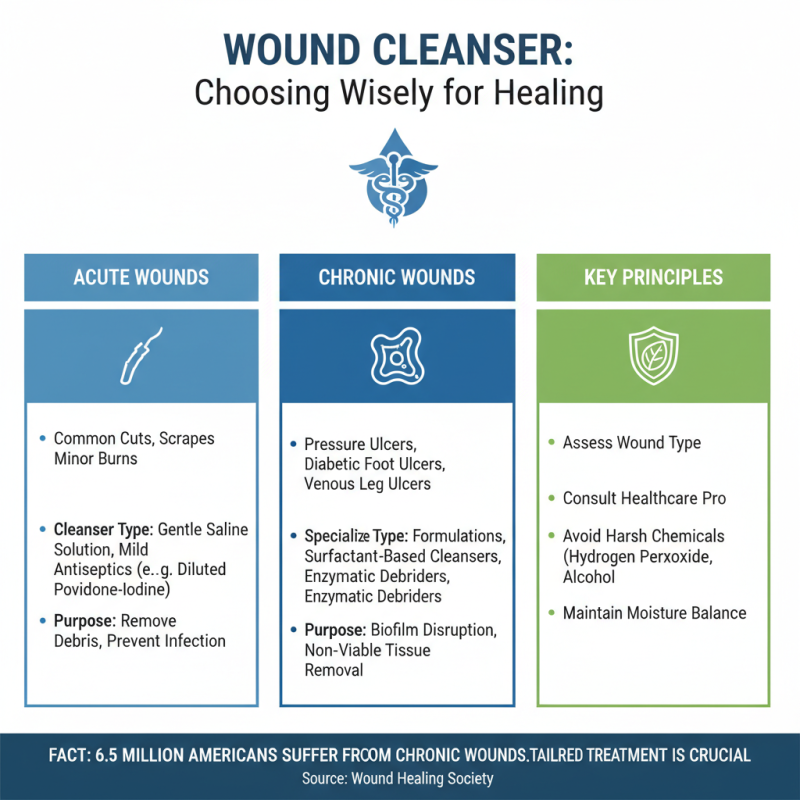
Choosing the right wound cleanser is crucial for effective healing. Each type of wound requires specific care. For instance, a chronic wound may need a more specialized approach than an acute one. According to a report from the Wound Healing Society, approximately 6.5 million people in the U.S. suffer from chronic wounds, highlighting the importance of tailored treatments.
For deeper wounds, saline solutions work well. They help in cleaning without irritating the tissue. In contrast, abrasions often benefit from gentle foams. These foams minimize pain and allow for easier application. The selection typically depends on the wound's condition. Factors like moisture levels and presence of infection should also be considered. Yet, it is not uncommon for individuals to overlook these details.
Additionally, the use of pH-balanced cleansers can support healing for diabetic wounds. The right acidity can aid in reducing infection risks. A study emphasized that inappropriate choices sometimes lead to complications. Not every product enhances healing; some may even slow it down. Many assume all cleansers are the same, which is far from reality. Understanding specific needs can prevent missteps in wound management.