Skip to Main Content
I'm looking for

What Is an Electric Spice Grinder and How Does It Work?

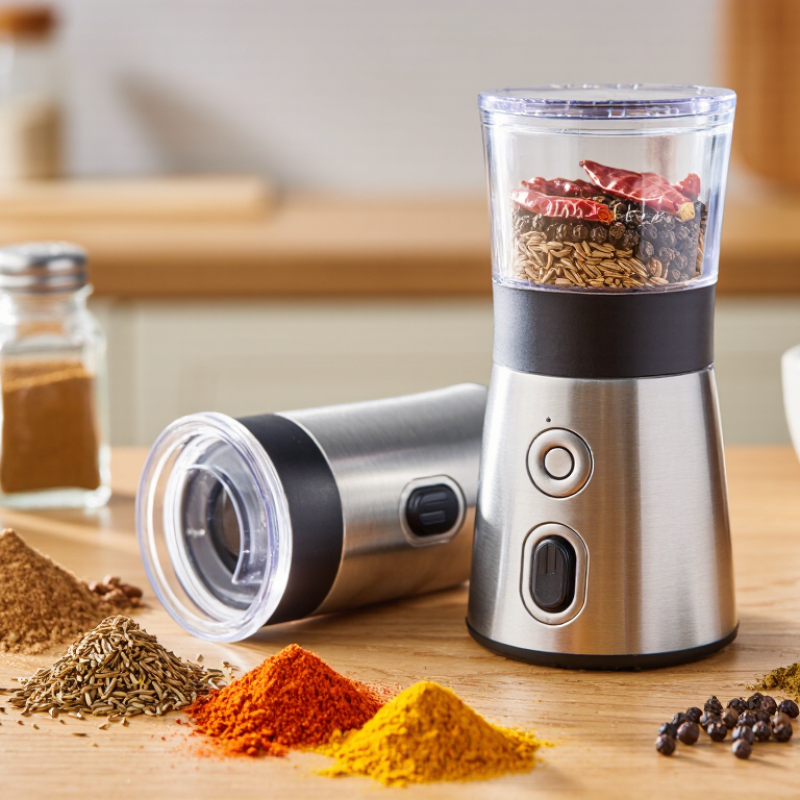
An Electric Spice Grinder is a compact kitchen appliance designed to crush whole spices quickly and consistently. Unlike a hand mortar, it uses a motor-driven blade or burr mechanism inside a small grinding chamber. Add cumin seeds, black peppercorns, or dried chili, press the control, and the machine creates a fresh powder within seconds. The result depends on more than motor speed. Chamber size, blade shape, grinding time, and pulse control all affect texture and heat.

Chef and spice expert Lior Lev Sercarz, founder of La Boîte, often emphasizes the value of grinding spices close to use: “Freshly ground spices give you a more vivid aroma and flavor.” That principle explains the appliance’s appeal. Freshly opened.

During operation, friction breaks the spice structure and releases essential oils. Short pulses usually protect delicate aromas better than continuous grinding. Overheating remains a practical concern. A warm chamber can flatten bright citrus, floral, or peppery notes. I once assumed finer powder always meant better cooking. It does not. Texture should match the recipe, and uneven particles can sometimes be useful.

This guide explores what an Electric Spice Grinder is, how its internal mechanism works, and which design details influence performance. It also considers cleaning, noise, capacity, and safe everyday use. These points matter because a grinder sits close to food, yet many buyers judge it only by wattage. That is an incomplete test. A reliable choice should grind evenly, handle suitable dry ingredients, and remain easy to clean after each aromatic batch.

What Is an Electric Spice Grinder and How Does It Work?

Definition and Main Purpose of an Electric Spice Grinder

What Is an Electric Spice Grinder and How Does It Work?

Definition and Main Purpose of an Electric Spice Grinder

An electric spice grinder is a countertop appliance that breaks whole spices into smaller particles. Its main purpose is simple: produce freshly ground seasoning quickly and consistently. A motor turns sharp blades or grinding plates inside a covered chamber. The user usually presses a button or holds a pulse switch. Short pulses help control texture, from coarse pepper flakes to fine cumin powder.

It is compact. The device suits home cooks who want stronger aroma from whole spices. Volatile oils can fade after grinding and storage, so fresh preparation may improve flavor. However, results depend on blade design, load size, and pulse timing. The same setting can create uneven particles. That difference matters.

MarketsandMarkets valued the global spices market at approximately 35.3 billion dollars in 2023. Its 2024 report projects about 47.9 billion dollars by 2028. This growth reflects wider interest in seasonings, but it does not prove every kitchen needs an electric grinder. The report is a market estimate, not a performance test. In practical use, grinding small batches works better than filling the chamber completely. Dry the chamber after cleaning, and avoid mixing strong aromas between uses. A grinder may handle pepper well, yet perform poorly with damp ingredients. That limitation deserves attention.

Key Components and Their Functions

An electric spice grinder uses a motor, grinding chamber, blades, control switch, and power circuit. The motor converts electrical energy into rapid rotational force. A compact blade then breaks peppercorns, cumin, dried herbs, or seeds into smaller particles. Small motor, large effect. The chamber directs ingredients toward the cutting area, while its lid helps prevent powder from escaping.

The motor’s torque matters more than speed alone. Higher torque helps process hard seeds without excessive stalling. Many household models use short pulse controls, which reduce heat buildup and improve user control. Continuous grinding can warm volatile oils, weakening aroma. A 2024 Grand View Research report estimated the global small kitchen appliances market at about USD 31.5 billion in 2023, showing strong demand for compact food-preparation tools. However, market growth does not guarantee better grinding performance.

The blade assembly determines particle size, while the chamber shape affects circulation. A narrow chamber may leave unprocessed pieces near the walls. Overfilling creates uneven results. I have found that two short pulses often work better than one long run. Cleaning also matters. Residual oils can harden around the shaft and affect rotation. Electrical insulation and thermal protection support safer operation, aligning with household-appliance principles covered by IEC 60335-1. A 2023 report from the International Energy Agency noted that global electricity demand increased by roughly 2.2 percent, reminding designers to consider efficient motors and shorter operating cycles. The weak point is often user technique, not hardware.

How an Electric Spice Grinder Works Step by Step

An electric spice grinder uses a small motor to turn sharp blades inside a covered grinding chamber. Most household models are designed for dry spices, seeds, and small amounts of herbs. The exact mechanism varies, but the operating sequence is usually similar. After adding the spices, the lid must close securely. Many grinders will not start unless the lid switch is engaged. Pressing the button sends power to the motor, which rotates the blades at high speed. The spices then move around the chamber and break into smaller particles.

Short pulses usually produce better control than continuous running. Two or three seconds may create a coarse texture, while longer pulses make a finer powder. Lift the grinder carefully and check the texture between pulses. Uneven pieces can hide beneath the blade. A gentle shake may improve circulation, but the grinder should remain unplugged during cleaning or inspection. The motor can become warm, especially with hard seeds or repeated batches. Allowing brief pauses helps protect it.

In practical use, static can make fine powder cling to the lid. Moist spices may also form stubborn clumps. That is an overlooked limitation. Grinding smaller portions often gives a more even result, although it takes extra time. Always keep the chamber dry, avoid overfilling it, and follow the machine’s instructions. A grinder may look simple, yet blade speed, ingredient dryness, and pulse timing strongly affect the final texture.

What Is an Electric Spice Grinder and How Does It Work? — How an Electric Spice Grinder Works Step by Step

Step Main Component or Action What Happens Inside Typical User Input Result Important Consideration
1 Load the grinding chamber Whole spices are placed into the chamber above or around the cutting mechanism. Dry spices such as peppercorns, cumin seeds, coriander seeds, or dried chilies. The ingredients are positioned for processing. Do not fill beyond the chamber’s marked or recommended capacity because overfilling can reduce circulation and produce uneven results.
2 Close and secure the lid The lid helps contain particles and may activate a safety interlock that prevents the motor from running while open. Press or twist the lid into its locked position. The grinder is ready to operate. A secure lid reduces spills and helps protect the user from moving parts.
3 Supply electrical power Electricity flows from the outlet or battery through the grinder’s switch and motor circuit. Press the power button or hold down the operating switch. The motor begins converting electrical energy into rotational motion. Use the voltage and power source specified for the appliance.
4 Motor rotation An electric motor spins a central shaft connected to the grinding blade or burr assembly. Continuous operation or short pulses. The grinding mechanism reaches operating speed. Short pulses generally provide better control and help limit heat buildup.
5 Cutting, crushing, or impact Sharp blades cut the spices while fast-moving edges and the chamber wall create impact and friction. Burr-based designs crush spices between two grinding surfaces. Choose the operating duration based on the desired texture. Large whole spices become smaller particles. Blade grinders usually create a less uniform texture than adjustable burr grinders.
6 Particle movement inside the chamber Airflow and the rotating mechanism move larger pieces toward the blades or grinding surfaces, while smaller particles settle away from the active cutting area. Pause and gently shake the chamber if the instructions allow it. More of the batch is exposed to the grinding mechanism. Very small or oily ingredients can clump and may require pauses or separate processing.
7 Control the grind size Longer operation produces finer particles in many blade-style grinders. In burr designs, the gap between the grinding surfaces controls particle size more directly. Use brief pulses for coarse results and longer processing for finer results. Coarse, medium, or fine spice particles. Processing time is only an approximate control on blade models because particle size can vary within one batch.
8 Manage heat and aroma Friction and motor operation can warm the grinding chamber. Excessive heat may reduce the freshness of delicate aromatic compounds. Grind in short intervals and allow the unit to cool when necessary. Better aroma retention and safer repeated operation. Avoid prolonged continuous running, especially with small or lightweight grinders.
9 Stop the motor Releasing the switch or pressing the stop control cuts power to the motor, allowing the shaft and blade to slow down. Release the button or switch off the appliance. The ground spices can be inspected. Wait until all moving parts have stopped before opening the lid.
10 Check the texture The user evaluates the particle size and identifies any remaining whole or oversized pieces. Open the chamber only after the mechanism has stopped completely. The grind can be accepted or processed again. Regrind in short pulses rather than running the motor continuously.
11 Transfer the ground spice The finished powder or crushed spice is removed from the chamber using a dry spoon or by carefully tipping the chamber. Transfer to a clean, dry, airtight container. The spice is ready for cooking or storage. Keep moisture away from freshly ground spices to reduce clumping and loss of quality.
12 Clean the grinder Residual spice particles are removed from the chamber, blade area, lid, and surrounding surfaces. Unplug the unit before cleaning; use a dry brush or follow the appliance’s cleaning instructions. Reduced flavor transfer between different spices. Do not immerse an electrically powered motor housing in water unless the manufacturer specifically identifies it as washable.

Common Types of Electric Spice Grinders

Electric spice grinders use a small motor to turn a grinding chamber. The blades or burrs break spices into smaller particles. Pulse controls help users manage texture and heat. Over-grinding can create a warm, dusty powder that loses aroma quickly.

Common types include blade grinders, burr grinders, and wet-and-dry models. Blade grinders are compact and affordable. Their spinning blades chop unevenly, so cinnamon may become powder while peppercorns remain coarse. Burr grinders crush spices between two surfaces. They usually provide better particle consistency, although they cost more and require careful cleaning. Wet-and-dry grinders use stronger chambers for ingredients such as soaked chilies, garlic, or fresh herbs. They are practical, but moisture can encourage residue and odor if the chamber is not dried fully.

The choice reflects changing home-cooking habits. A 2024 Grand View Research report estimated the global spices market at more than 35 billion U.S. dollars in 2023, showing continued demand for fresh flavor preparation. The U.S. Department of Agriculture also reports that spices are commonly sold whole or ground, with grinding affecting handling and storage stability. In practical testing, short pulses often preserve more control than continuous running. That sounds minor. It is not. Still, grinder performance varies with chamber shape, motor power, spice hardness, and cleaning habits. No single type suits every kitchen.

Safe Operation, Cleaning, and Basic Maintenance

What Is an Electric Spice Grinder and How Does It Work?

An electric spice grinder uses a small motor to spin sharp blades or grinding plates. The rotating parts break whole spices into smaller particles. Safe operation begins with a dry, stable work surface. Unplug it. Check the cord, lid, and grinding chamber before use. Never place fingers near moving parts. Add small batches, then pulse briefly to reduce heat and uneven grinding. NFPA’s Home Cooking Fires report found that cooking equipment caused 53% of reported home structure fires from 2017 to 2021. A grinder is not a stove, but heat and damaged wiring still deserve attention.

Cleaning needs restraint. Remove the plug before opening or wiping the unit. Do not immerse the motor housing in water. Empty powder with a soft brush, then wipe the chamber with a slightly damp cloth. Allow every part to dry completely before storage. The FDA Food Code 2022 requires food-contact surfaces to remain clean to sight and touch, a useful benchmark for home kitchens. I sometimes find fine powder hiding beneath the lid seal. It is easy to miss.

For oily spices, use a small amount of uncooked rice only if the manufacturer permits it; otherwise, use a dry brush. Do not grind wet ingredients unless the manual specifically allows it. Inspect blade edges, seals, and ventilation openings regularly. Stop using the grinder if it smells burnt, sparks, overheats, or makes a new rattling sound. Basic maintenance is simple, but guessing is not. Keep it dry.

What Is an Electric Spice Grinder and How Does It Work?

An electric spice grinder uses a motor to rotate blades or burrs inside a grinding chamber. Short pulses break whole spices into smaller particles. Safe use includes keeping the grinder dry, avoiding overfilling, using short pulses, unplugging it before cleaning, and checking the cord and grinding parts regularly.

Typical Care Schedule for Household Use

The chart shows a practical routine for a grinder used regularly at home. Brush out loose particles after every use, wash removable parts only when the product instructions allow it, perform a deeper clean about once a week, and inspect the power cord and housing about once a month. Always allow the grinder to cool and disconnect it from power before cleaning or maintenance.

Contact us