Skip to Main Content
I'm looking for

Top Surgical Wound Care Products for Global Buyers

Choosing the right Surgical Wound Care Products requires more than comparing prices or counting product features. Global buyers must evaluate clinical evidence, material safety, sterilization methods, shelf life, and intended use. A dressing that performs well in a dry operating room may fail in a humid coastal clinic. Small details matter, including package seals, absorbency, adhesive strength, and storage temperature.

Dr. David G. Armstrong, a recognized wound-care surgeon and researcher, has emphasized, “The diabetic foot is a global problem, and it requires a global solution.” This principle also applies to surgical wound management. Hospitals, distributors, and procurement teams need products that support different patient needs, surgical procedures, and healthcare environments. Advanced foam dressings, antimicrobial materials, transparent films, gauze, negative pressure systems, and closure-support products each have specific roles. None is universally superior.

Evidence should guide every decision.

This guide examines leading Surgical Wound Care Products for international purchasing teams. It considers wound protection, exudate control, infection-risk reduction, patient comfort, application time, and total cost of care. Reliable suppliers should provide traceable documentation, clear instructions, quality certifications, and responsive technical support. Buyers must also verify local registration requirements before importing or distributing medical products.

Some comparisons remain imperfect. Clinical outcomes can vary with surgical technique, patient health, nursing practice, and follow-up quality. A cheaper dressing may create hidden costs through frequent replacement or skin damage. Conversely, premium technology may offer limited value in low-resource settings. Careful evaluation, not marketing language, should shape a responsible purchasing decision.
Top Surgical Wound Care Products for Global Buyers

Types and Uses of Surgical Wound Care Products

Top Surgical Wound Care Products for Global Buyers

Types and Uses of Surgical Wound Care Products

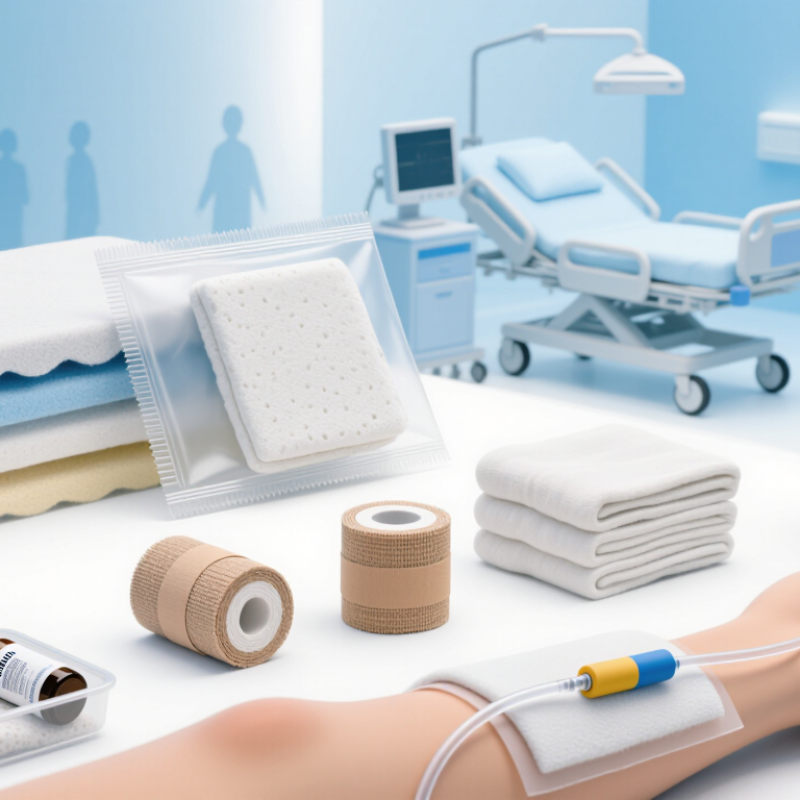
Surgical wound care products support protection, drainage control, and tissue recovery after procedures. Sterile gauze is useful for light exudate and routine dressing changes. Non-adherent dressings protect fragile tissue during removal. They reduce painful pulling. Transparent films allow visual inspection while blocking external contamination. However, they may not suit heavily draining wounds.

Foam dressings absorb moderate exudate and cushion areas exposed to friction. Hydrocolloid dressings maintain a moist environment for selected superficial wounds. Alginate products can manage heavier drainage and may support bleeding control when clinically appropriate. Antimicrobial dressings require careful selection, especially around sensitive tissue. They should not replace wound assessment or infection treatment. Closure strips and skin adhesives help support clean, low-tension incisions. They are not suitable for every wound edge.

Negative pressure therapy uses controlled suction to remove fluid and support wound management in specific cases. Trained professionals must select the pressure, dressing interface, and replacement schedule. A practical assessment considers incision depth, drainage color, odor, surrounding redness, skin condition, and patient comfort. No product fits every incision. Even experienced teams can overlook moisture trapped beneath a film. That small detail may cause skin damage. Global buyers should verify sterility, packaging integrity, instructions, and regulatory documentation before purchase. Product performance also depends on storage conditions and staff training. Reassessment matters more than habit.

Key Features of Effective Wound Care Solutions

Top Surgical Wound Care Products for Global Buyers

Key Features of Effective Wound Care Solutions

Effective surgical wound care begins with controlled protection, not attractive packaging. A reliable dressing should absorb fluid without sticking to the wound surface. It should also maintain a balanced moisture level during healing. Excess moisture can soften surrounding skin. Too little moisture may cause the dressing to adhere painfully.

Clinical teams often check sterility, breathability, and secure fixation before selecting products. Transparent films can support visual inspection without frequent removal. Non-woven pads may suit wounds with moderate drainage. Gentle adhesive edges help reduce skin trauma, especially for older patients. Fit matters. A dressing that lifts at the corners can expose the incision within hours.

Global buyers should examine packaging integrity, lot traceability, shelf-life data, and storage requirements. Instructions should remain clear after translation and support safe use in different clinical settings. Materials should be skin-compatible and easy to remove with controlled pressure. Small details matter, such as visible opening tabs and packaging that resists moisture.

No product performs perfectly for every incision. Drainage levels, skin types, climate, and staff training can change results. Buyers may need practical evaluations before placing large orders. I have found that simple handling tests reveal problems that product sheets miss. A dressing can look advanced yet feel awkward with surgical gloves. Reliable wound care depends on evidence, usability, and honest review of these limitations.

Top Surgical Wound Care Products for Global Buyers - Key Features of Effective Wound Care Solutions
Product Category Primary Wound-Care Function Key Features Absorbency / Moisture Management Typical Surgical Applications Procurement and Quality Checks
Sterile Normal Saline Irrigation Wound cleansing and removal of loose debris before dressing or closure. Sterile Non-cytotoxic in routine use Ready-to-use Does not provide absorption; used as a cleansing fluid. Incisions, postoperative wounds, and wounds requiring gentle irrigation. Check concentration, container integrity, sterility, opening method, lot traceability, and expiry date.
Nonwoven Gauze Sponges Light exudate absorption, wound protection, and application or removal of topical solutions. Soft surface Low lint options Sterile or non-sterile Low to moderate absorbency, depending on fiber composition and ply count. Clean surgical incisions, drain sites, minor abrasions, and general wound coverage. Verify material composition, ply count, lint performance, dimensions, sterility status, and packaging seal.
Transparent Film Dressings Protects the wound from external contamination while allowing visual inspection. Water-resistant Breathable film Transparent Minimal absorption; allows moisture vapor transmission but is not intended for heavily exuding wounds. Closed surgical incisions, catheter sites, and wounds with minimal drainage. Assess adhesive performance, conformability, vapor transmission, skin compatibility, and ease of removal.
Absorbent Island Dressings Combines a wound-contact layer with an absorbent central pad and adhesive border. All-in-one format Protective border Simple application Low to moderate absorbency; capacity depends on pad size and construction. Clean, closed incisions and postoperative wounds with light to moderate drainage. Check pad-to-border ratio, absorbency claims, adhesive width, dressing dimensions, sterility, and packaging usability.
Hydrocolloid Dressings Maintains a moist wound environment and supports autolytic management of selected superficial wounds. Occlusive or semi-occlusive Conforms to body contours Longer wear potential Low to moderate absorbency; absorbs fluid and forms a gel at the wound surface. Selected superficial wounds with low to moderate exudate; not generally intended for infected or heavily draining wounds. Confirm indications, wear-time guidance, edge seal, odor control, residue characteristics, and compatibility with periwound skin.
Foam Dressings Absorbs exudate while cushioning the wound and reducing contact with external friction. Cushioning Non-adherent options Multiple thicknesses Moderate to high absorbency, depending on foam structure and backing layer. Postoperative wounds, donor sites, pressure-related wounds, and wounds with moderate exudate. Compare fluid-handling capacity, retention under compression, conformability, wound-contact layer, and fixation method.
Calcium Alginate Dressings Manages moderate to heavy exudate and may assist with minor bleeding through fiber interaction with wound fluid. High absorbency Soft gel formation Rope or sheet formats High absorbency; converts to a gel when saturated with wound fluid. Exuding surgical wounds, cavity wounds, and wounds with minor bleeding where clinically appropriate. Check fiber integrity, gel strength, wet removal behavior, calcium or sodium composition, and requirement for a secondary dressing.
Hydrofiber-Type Gelling Dressings Vertically absorbs wound fluid and forms a cohesive gel to support exudate containment. High fluid handling Cohesive gel Reduced lateral spread Moderate to high absorbency, with gel formation that helps retain exudate within the dressing. Moderately to heavily exuding postoperative wounds and selected cavity wounds. Evaluate absorption capacity, gel cohesion, ease of removal, dressing configuration, secondary-cover requirements, and clinical indications.
Silicone Contact Layer Dressings Protects the wound bed and reduces trauma during dressing changes. Low-adherence Atraumatic removal Flexible mesh or perforations Minimal absorption; normally used with a secondary absorbent dressing. Fragile surgical wounds, skin graft sites, donor sites, and wounds where protection of new tissue is important. Check atraumatic removal performance, repositionability, drainage passage, transparency, and compatibility with secondary dressings.
Antimicrobial Dressings Provides localized antimicrobial activity as part of a broader infection-prevention or wound-management plan. Silver, iodine, or PHMB options Localized action Clinical-use restrictions may apply Varies by carrier material; some products also provide moderate or high exudate management. Selected wounds with elevated bioburden or infection risk, based on clinical assessment and local protocols. Review active ingredient, release profile, contraindications, duration of use, cytotoxicity data, allergy warnings, and regulatory status in the target market.
Negative Pressure Wound Therapy Sets Applies controlled subatmospheric pressure to assist exudate management and support wound-bed preparation. Sealed system Adjustable pressure Exudate collection High exudate management when correctly sealed and operated according to clinical instructions. Selected complex, dehisced, or heavily exuding wounds under trained clinical supervision. Verify pump performance, alarm functions, canister capacity, tubing compatibility, seal reliability, power requirements, and training materials.
Postoperative Abdominal or Incision Management Systems Protects closed incisions and helps manage drainage across a larger or anatomically challenging area. Extended coverage Flexible fixation Drainage management options Moderate to high absorbency, depending on the integrated dressing or connected therapy system. Long incisions, abdominal surgery, orthopedic procedures, and wounds requiring broader protection. Assess coverage dimensions, fixation stability, skin tolerance, mobility, drainage visibility, and compatibility with postoperative protocols.
Product selection should be based on wound depth, exudate level, infection status, tissue condition, patient factors, and the instructions for use. Global buyers should also verify local regulatory clearance, sterility assurance, biocompatibility documentation, packaging integrity, storage requirements, and traceability.

How to Select Products for Different Surgical Wounds

Top Surgical Wound Care Products for Global Buyers

Selecting wound care products starts with the wound, not the catalogue. Clean, closed incisions usually need low-adherence dressings that protect sutures and reduce friction. Monitor drainage during the first 48 hours. Excess fluid requires absorbent layers, while dry wounds may need moisture-balanced materials.

For deeper or heavily exuding wounds, choose products that manage fluid without damaging granulation tissue. Foam, superabsorbent, or alginate-based options may suit different drainage levels. Avoid routine antimicrobial use when infection is not suspected. The CDC recommends antimicrobial dressings mainly when clinically indicated, not as a universal precaution (CDC Guideline for the Prevention of Surgical Site Infection, 2017). This point is often overlooked.

Contaminated wounds demand closer assessment, cleansing protocols, and documented review. The WHO reports that surgical site infections affect about 11% of surgical patients in low- and middle-income countries, compared with about 2% in high-income countries (WHO Global Guidelines for the Prevention of Surgical Site Infection, 2016). Buyers should verify sterility, absorbency, skin compatibility, shelf life, and local regulatory documentation. A product may perform well in a hospital but fail in humid storage conditions. Packaging matters. So does staff training. Product selection is rarely perfect; wound reassessment should guide every change.

Top Surgical Wound Care Products for Global Buyers

How to Select Products for Different Surgical Wounds

Clinical fit score: 1 = limited suitability and 5 = commonly suitable for the wound scenario. Non-adherent contact layers are generally preferred for clean, low-exudate incisions; foam dressings suit low-to-moderate exudate; hydrofiber or alginate products are designed for moderate-to-heavy exudate; antimicrobial dressings should be reserved for clinically indicated infection-risk situations and used according to local protocols.

Educational purchasing guide only. Product selection should be based on wound assessment, exudate level, infection status, patient needs, and applicable regulatory requirements.

Global Standards, Packaging, and Supply Considerations

Global buyers should evaluate surgical wound care products against the destination market’s requirements, not one universal checklist. Quality systems aligned with ISO 13485 can support consistent production and traceability. Risk management should address materials, skin contact, storage, and clinical use. Product safety evidence may include biocompatibility testing under ISO 10993.

Sterile products require validated sterilization and packaging processes. Depending on the method, relevant standards may include ISO 11135, ISO 11137, or ISO 17665. The sterile barrier should follow ISO 11607 principles. Inspect the seal carefully. A weak seal, crushed pouch, or unclear expiry date can create serious problems. Labels should show the lot number, sterilization status, expiry date, storage conditions, and required local-language information. Some markets also require unique device identification.

Packaging must survive real transport conditions. Test cartons against vibration, compression, temperature changes, and humidity. A box that looks strong in a warehouse may fail after several weeks at sea. Supply planning also needs approved samples, production lead times, safety stock, and documented change control. Ask for certificates, test reports, declarations, and traceability records before placing large orders. Do not rely only on a polished specification sheet. It may omit packaging limits or regional registration duties. One practical weakness remains common: buyers sometimes focus on unit price and overlook inspection, relabeling, or delayed customs clearance. Those costs can exceed the original saving.

Storage, Safety, and Quality Control for International Buyers

Top Surgical Wound Care Products for Global Buyers

Storage, Safety, and Quality Control for International Buyers

Surgical wound products must survive long journeys, changing climates, and busy hospitals. The World Health Organization reported that surgical site infections affect up to 11% of surgical patients in low- and middle-income countries. This makes packaging, sterility, and traceability purchasing priorities, not minor details. Buyers should request documented shelf-life studies, lot numbers, sterilization records, and clear expiration dates. Products should remain sealed after exposure to heat, humidity, vibration, and dust.

Storage conditions need written control. Check temperature limits before shipment. Use data loggers for sensitive consignments. A clean, dry warehouse is essential, yet many purchasing plans treat storage as an afterthought. That assumption deserves review. The WHO Global Report on Infection Prevention and Control (2022) states that about 7 in 100 acute-care patients in high-income countries acquire at least one healthcare-associated infection. The reported rate rises to 15 in 100 in low- and middle-income countries. Reliable wound care depends on more than product selection.

Tips: Inspect cartons for crushing, moisture, or broken seals. Keep stock away from floors and direct sunlight. Apply FEFO rotation, meaning first-expire, first-out. Match every delivery with its certificate and lot record. ISO 11607 packaging requirements and ISO 13485 quality systems offer useful reference points. Still, paperwork can contain errors. Recheck translated labels, local storage capacity, and staff handling practices before approval.

Contact us